May 24, 2026
Outdoor Dining Sets Buying Guide for Indian Homes: Types, Sizes & Selection
Complete guide to choosing outdoor dining sets for Indian balconies, terraces, and gardens. Sizing, materials, shape, and the mistakes to avoid before you buy.
Quick answer
The right outdoor dining set depends on three things: your space (balcony 80+ sq ft fits a 4-seater, terrace 120+ sq ft fits a 6-seater, garden 200+ sq ft fits an 8-seater), your climate (heat-resistant materials for North India, salt-resistant for coastal cities, mould-resistant for monsoon regions), and your usage frequency (occasional dining tolerates more decorative pieces; daily-use needs robust commercial-grade construction). Most Indian buyers regret undersizing the table — always add 60 cm of clearance around all sides for chairs to pull out.
Why Outdoor Dining Sets Need a Different Decision Framework
You wouldn't buy an indoor dining table without thinking about how many people you host, how often, and how the chairs feel after two hours. Outdoor dining sets are no different — but they have to handle three things indoor dining sets don't: weather, sun exposure during meals, and the size constraints of balconies and terraces that weren't designed as dining rooms.
This guide walks through every decision you need to make before buying, in the order you should make them.
Step 1: Match the Set to Your Space
The single most common regret with outdoor dining sets in India is buying a beautiful set that doesn't physically fit the space — or that fits but leaves no room to walk around. Here's how to think about it.
How to measure your space
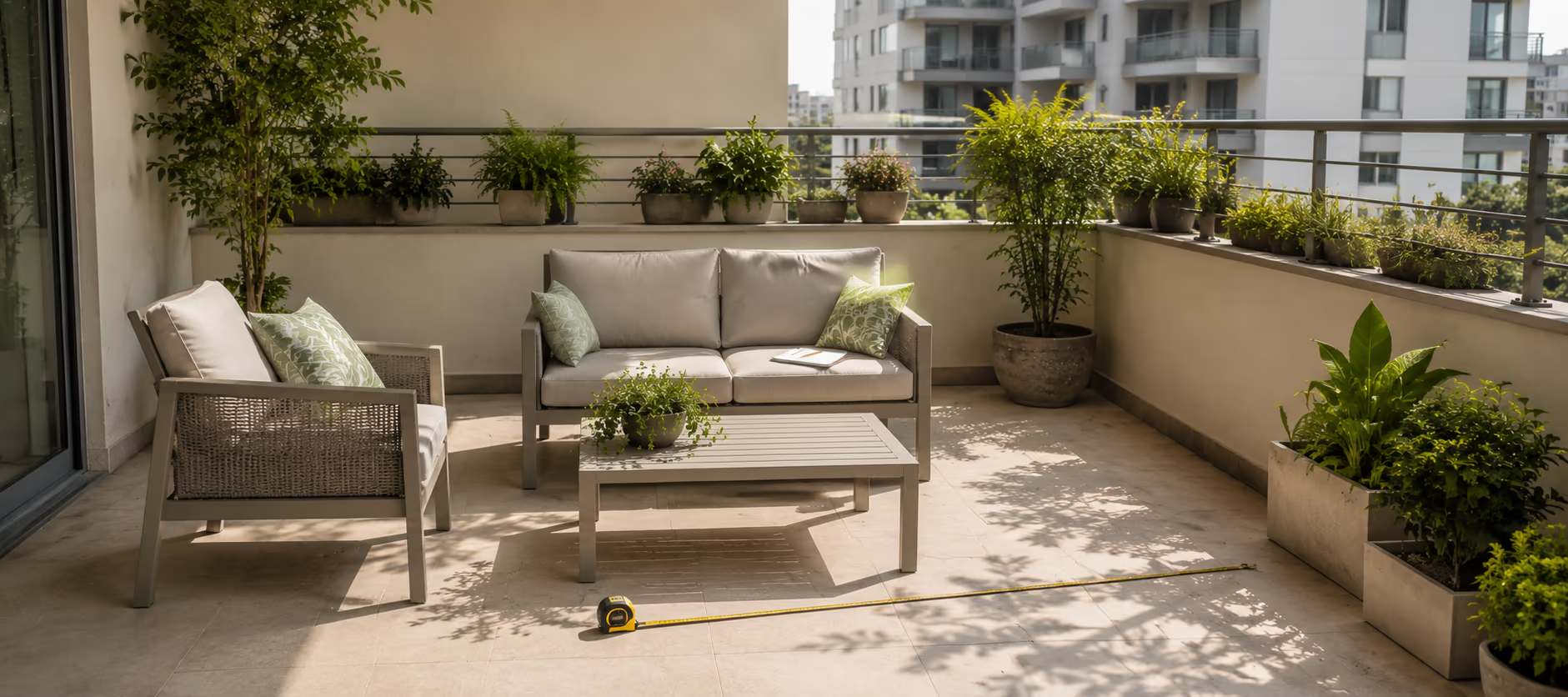
Before anything else, measure the area where the dining set will live. You need three numbers:
- Length and width of the available area (in feet or centimetres)
- The narrowest passage to reach the space (door widths, lift dimensions, stair turns)
- Ceiling height if it's a covered balcony or pergola
Now subtract clearance:
- 60 cm of clearance around all sides of the table is needed for chairs to pull out comfortably
- 90 cm of clearance on at least one side if you want to walk past someone seated
If you have a 10 ft × 8 ft balcony, you don't have 80 sq ft for a dining set. You have closer to 50 sq ft — the rest is clearance.
Sizing by seat count
| Seat count | Table size (typical) | Footprint with chairs | Suits |
|---|---|---|---|
| 2-seater (bistro) | 60-80 cm round | 1.5 × 1.5 m | Compact balconies, breakfast nooks |
| 4-seater | 90-120 cm round or 120-150 cm rectangular | 2.5 × 2.5 m | Standard balconies, small terraces |
| 6-seater | 150-180 cm rectangular | 3.5 × 2 m | Mid-sized terraces, small gardens |
| 8-seater | 200-240 cm rectangular | 4 × 2.5 m | Large terraces, garden settings |
| 10+ seater | 240+ cm rectangular or extending | 5 × 3 m+ | Garden compounds, hospitality |
A few practical notes from real Indian apartments:
- Apartment terraces in cities like Mumbai, Bangalore, and Pune are typically 100-200 sq ft. A 6-seater rectangular set is usually the sweet spot.
- Independent floor balconies in Delhi, Noida, and Gurgaon are often 60-120 sq ft. A 4-seater set works best.
- Villa gardens in Faridabad, Lavasa, or Whitefield can accommodate 8-seaters or larger.
Step 2: Choose the Shape
Shape isn't just aesthetics. It changes how many people fit, how easy conversation flows, and how the set works in your specific space.
Round tables
Best for:
- Conversation (everyone can see everyone)
- Tight spaces (no sharp corners to navigate around)
- Even numbers of guests
- Indian dining where shared dishes go in the centre
Limitations:
- Wastes floor space in rectangular rooms or balconies
- Hard to extend for extra guests
- Maximum practical size is 150 cm — beyond that, reaching across is awkward
Rectangular tables
Best for:
- Maximum seating in narrow spaces (balconies, long terraces)
- Hosting larger groups
- Pairing with a bench on one side (saves floor space)
- Formal dining
Limitations:
- People at opposite ends struggle to converse
- Sharp corners can be awkward in tight passageways
- Looks utilitarian in some aesthetic settings
Square tables
Best for:
- Small balconies where you want 4 people equidistant
- Modern aesthetic
- Predictable footprint planning
Limitations:
- Doesn't scale past 4-6 seats
- Less efficient seating than rectangular at the same size
Extending tables
Best for:
- Flexible hosting (4 daily, 8 occasionally)
- Smaller spaces that occasionally need to seat more
- People who entertain rarely but seriously
Limitations:
- Costs more than fixed tables
- More mechanical parts to maintain
- Extension leaves can warp differently than the main table
Step 3: Choose the Material
Outdoor dining sets face a specific challenge that lounge or seating furniture doesn't: hot food and drinks on the surface. This affects material choice differently than other outdoor pieces.
Teak
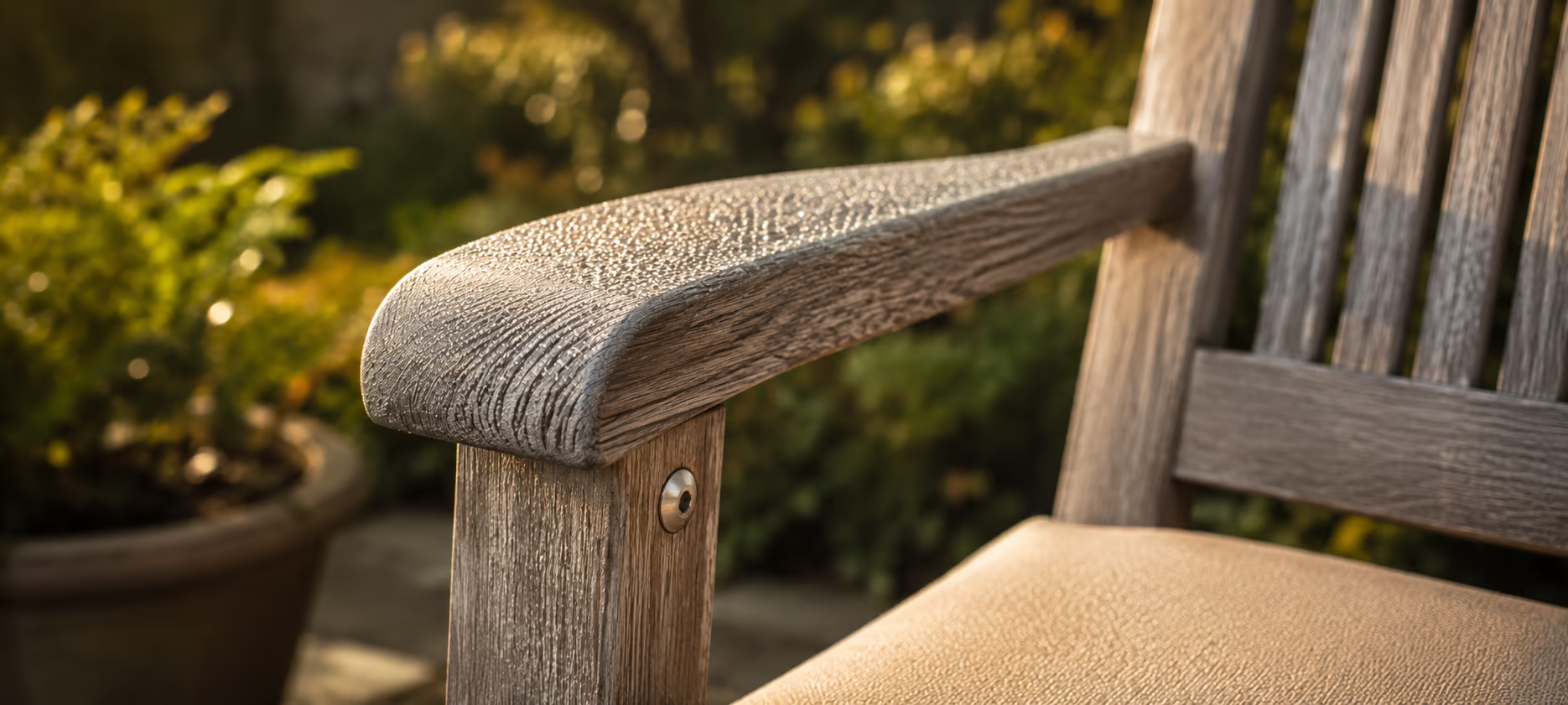
The case for teak dining tables: Naturally water-resistant, ages beautifully into a silver-grey patina if left untreated, handles spills well, doesn't conduct heat. The classic Indian outdoor dining choice.
The case against: Needs annual oiling to maintain the original golden colour. Heavy — a 6-seater teak table can weigh 50-70 kg. Expensive — quality teak dining sets start at ₹60,000+.
Best for: Buyers who want a 10-15 year piece, are willing to maintain it, and have the budget.
Marine-grade aluminium
The case for aluminium: Lightweight (easier to reposition), rust-proof, doesn't warp, available in many colours and finishes. Powder-coated aluminium tables handle Indian sun and rain well.
The case against: Conducts heat — in summer afternoon sun, the surface can become uncomfortably hot for plates (especially in Delhi NCR). Can dent if heavy pots are placed roughly. Some cheap aluminium tables flex slightly under heavier loads.
Best for: Buyers who want low maintenance, modern aesthetics, and pieces they can move seasonally.
Wicker (HDPE / synthetic rattan)
The case for HDPE wicker: Looks warm and natural, UV-stabilised varieties last 8-12 years, doesn't conduct heat, comfortable to touch in summer.
The case against: Not ideal as the table-top surface (food spills can stain the weave). Best used for chair construction with a complementary table material (often aluminium or stone).
Best for: Chairs in dining sets, with a non-wicker table. A wicker chair around a metal or stone table is a common Indian outdoor dining setup.
Stone and concrete
The case for stone: Heavy enough to never blow over, indestructible by weather, ages well, communicates permanence.
The case against: Cannot be moved easily once installed. Cold to the touch in winter. Some stone surfaces (especially marble) stain from spills if not sealed properly.
Best for: Permanent garden installations where the table will stay in one spot for years.
Composite materials (recycled plastic lumber, etc.)
The case for composites: Maintenance-free, warm-looking like wood, no warping or splitting, often comes with long warranties.
The case against: Expensive — usually priced like teak. Limited availability in India compared to traditional materials. Aesthetic options are narrower.
Best for: Buyers who want the look of wood without any maintenance.
Step 4: Chair Comfort and Configuration
A dining set is only as good as how comfortable the chairs are for a 90-minute dinner. Cushion comfort matters less here than chair geometry.
What to check on outdoor dining chairs
- Seat depth: 45-50 cm is comfortable for most adults. Shallower feels unsupported; deeper requires cushions for shorter people.
- Seat height: 45-48 cm from floor pairs correctly with standard table height (72-76 cm). Mismatched heights cause shoulder strain during long meals.
- Backrest angle: 95-105 degrees (slightly reclined from vertical) is correct for dining. Anything more reclined turns the chair into a lounger.
- Armrests vs no armrests: Armrests are more comfortable for longer dining but reduce seating capacity (you can't squeeze in extra chairs on the sides). Decide based on whether seat count is fixed or flexible.
Cushion considerations
Outdoor dining chair cushions, if used:
- Should be quick-drying (mesh or open-cell foam)
- Should have removable, washable covers
- Solution-dyed acrylic fabric (Sunbrella-grade) for the cover material
- Thickness 3-5 cm — anything thicker is for lounging, not dining
Many Indian outdoor dining sets work without cushions entirely. Bare chairs cool faster after sun exposure and require zero maintenance.
Step 5: Plan for Indian Weather Specifically
A few practical considerations that get overlooked:
Heat conduction on table surfaces
Dark metal tables in Indian summer afternoon sun can reach 60-65°C surface temperature. Plates can be uncomfortable to touch; ice melts within minutes. If your space has full afternoon sun without shade:
- Choose light-coloured tables (white powder-coated aluminium, pale teak)
- Or plan for an umbrella (with a base sized for your set — 50 kg base for a 4-seater, 75 kg for a 6-seater)
- Or position the set for morning sun and afternoon shade
Monsoon drainage
Outdoor dining tables benefit from:
- A central umbrella hole (for monsoon, you can plug the hole — but if you ever want shade, the hole has to exist already)
- Slight tilt or drainage gaps in the table top (water doesn't pool)
- Materials that handle a few hours of rain without lasting damage
Wind on high-rise balconies
For Gurgaon, Mumbai high-rises, and Bangalore tall buildings, summer pre-monsoon winds can hit 60-80 km/h. At those speeds:
- Tables under 25 kg can blow over
- Chairs under 8 kg can become projectiles
- Umbrellas without weighted bases fail dangerously
Heavier sets, weighted bases, or anchored solutions are required above 8th floor.
Step 6: Budget Tiers — What You Actually Get
Here's an honest breakdown of what each price point delivers in the Indian outdoor dining market.
₹15,000 - ₹35,000: Entry tier
Typical pieces: 4-seater plastic resin sets, low-grade aluminium with thin powder coating, decorative wicker over weak frames.
What to expect:
- 1-3 year lifespan in Indian climate
- Cushion fading within one summer if included
- Frame issues (loose joints, wobbling) by year 2
- Cheap-feeling materials on close inspection
Suitable for: Renters, temporary setups, secondary outdoor spaces.
₹40,000 - ₹80,000: Mid-tier
Typical pieces: Quality aluminium 6-seaters with proper powder coating, HDPE wicker over treated aluminium frames, lower-grade teak.
What to expect:
- 5-8 year lifespan with reasonable care
- Better cushions (some solution-dyed options)
- Proper hardware (stainless steel screws, reinforced joints)
- Looks acceptable for the long term
Suitable for: Most apartment buyers, primary outdoor dining setups.
₹90,000 - ₹2,00,000: Premium tier
Typical pieces: Grade A teak, marine aluminium with extended warranty, hand-woven HDPE over premium frames, designer brands.
What to expect:
- 10-15 year lifespan with proper care
- Sunbrella-grade cushions
- Comprehensive warranties (3-5 years)
- Heirloom-quality construction
Suitable for: Long-term homeowners, garden installations, premium terraces.
₹2,50,000+: Luxury tier
Typical pieces: Custom-designed, hand-finished teak; imported European brands; designer pieces by Indian luxury makers.
What to expect:
- 15-25 year lifespan
- Lifetime warranties on frames
- Custom dimensions, finishes, fabric options
- Investment-grade
Suitable for: Bungalow gardens, hospitality buyers, design-led purchases.
Common Outdoor Dining Set Mistakes
After thousands of conversations with Indian buyers, these are the regrets that come up most:
Mistake 1: Buying based on the showroom photograph. A set looks dramatic in a studio shot. The same set in a real 10x12 ft Indian balcony often looks oversized or wrong-scaled. Always measure and visualise.
Mistake 2: Skipping the umbrella consideration. Many Indian buyers want shade later but bought a table without an umbrella hole. Retrofitting is messy. Decide on shade strategy before ordering.
Mistake 3: Ignoring chair stackability. If you ever need to move chairs (for cleaning, monsoon storage, or rearranging), stackable chairs save real time. Non-stackable sets are harder to manage seasonally.
Mistake 4: Choosing a size that "almost fits". A 6-seater that just barely fits in a space with no walking room becomes unusable. Always go a size smaller than your space's absolute maximum — comfort matters more than capacity.
Mistake 5: Buying matching sets in tight spaces. A 4-piece matching set may not fit your balcony as well as a 2+2 combination from different ranges. Don't let "matching" override fit.
Mistake 6: Underestimating storage needs. Even quality outdoor dining sets benefit from cushion storage during monsoon and dust storms. Plan storage before buying.
Keep reading: Avoid the most common outdoor furniture buying regrets, understand the true 5-year cost of cheap vs quality, and for North Indian conditions see our Delhi NCR outdoor furniture guide. Explore outdoor dining collections or talk to our team about sizing for your space.
Final Thought
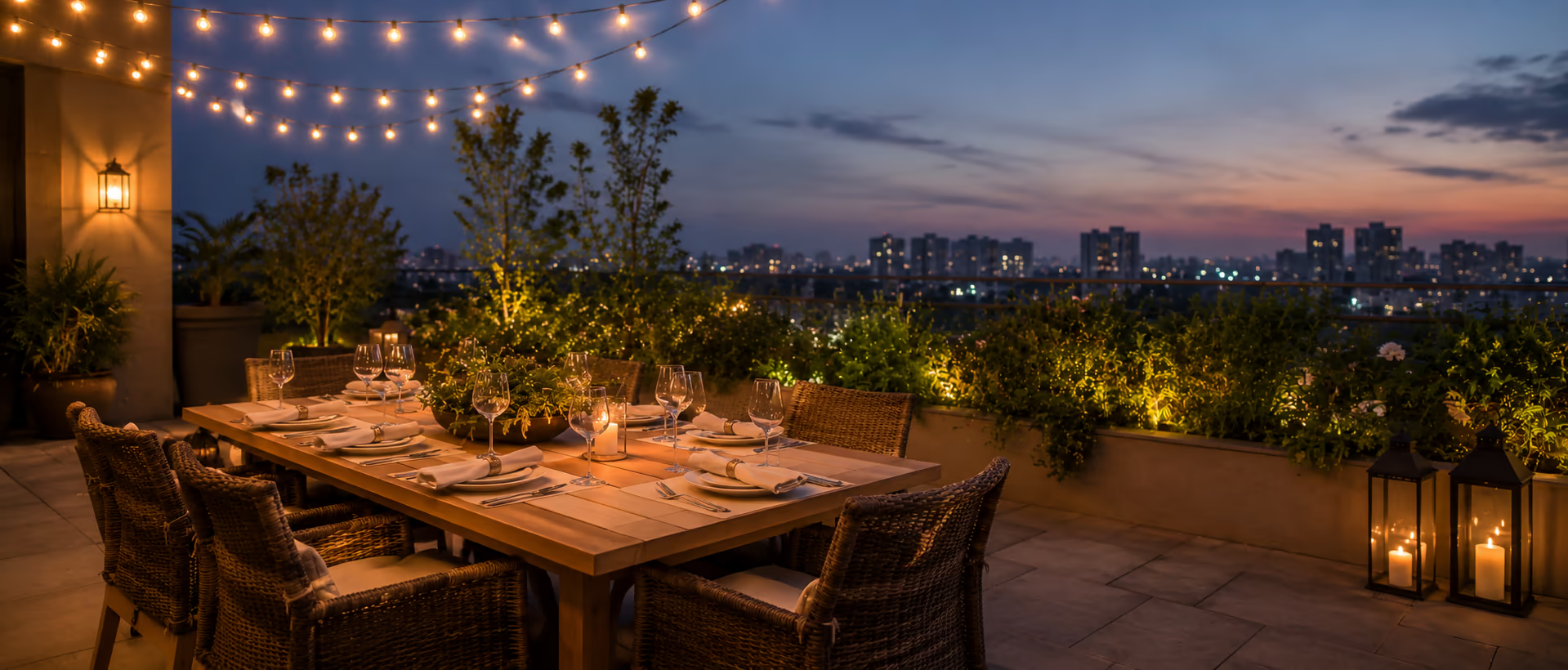
Outdoor dining is one of the most rewarding uses of an Indian outdoor space. Done right, the set lasts a decade and hosts hundreds of meals. Done wrong, it becomes a frustrating piece that doesn't fit, doesn't last, or doesn't feel right.
The decisions in this guide — space, shape, material, comfort, climate fit, budget — matter more than brand or style. A well-chosen mid-tier set will outperform a poorly-chosen premium one.
Planning an outdoor dining setup? Get a free 15-minute consultation with our team. We help Indian homeowners specify the right outdoor dining set for their space, climate, and entertaining style. Talk to us →
Frequently Asked Questions
For a typical apartment balcony of 80-120 sq ft, a 4-seater set (table around 90-120 cm, with 60 cm clearance around it) fits well. Bistro sets work for smaller 40-80 sq ft balconies.
Quality outdoor dining sets (mid-tier and above) can stay outside year-round in most Indian climates. Cushions should be stored or covered during monsoon and dust storms. Frames generally handle full exposure for 5-15 years depending on quality.
Marine-grade aluminium with proper drainage and HDPE wicker with aluminium frames handle Mumbai monsoon best. Untreated teak develops a silver patina (some love it, some don't). Avoid any iron, particle board, or untreated softwoods.
Entry-tier (basic aluminium 4-seater): ₹15,000-35,000. Mid-tier (better materials, 6-seater): ₹40,000-80,000. Premium tier (teak or designer brands): ₹90,000-2,00,000. Luxury/custom: ₹2,50,000+.
Armrests are more comfortable for longer dinners but reduce seating capacity. If your set count is fixed (4 or 6 chairs always), armrests work. If you sometimes want to squeeze in extra chairs, armless versions give flexibility.
Cushions add comfort for longer meals but require maintenance and storage. Many Indian buyers prefer cushion-free outdoor dining chairs because bare chairs cool faster after sun exposure and need no maintenance. Either approach is valid.
Mid-tier sets (₹40,000-80,000): 5-8 years. Premium sets (₹90,000-2,00,000): 10-15 years. Luxury and custom: 15-25 years. Lifespan depends heavily on city climate, exposure level, and maintenance habits.